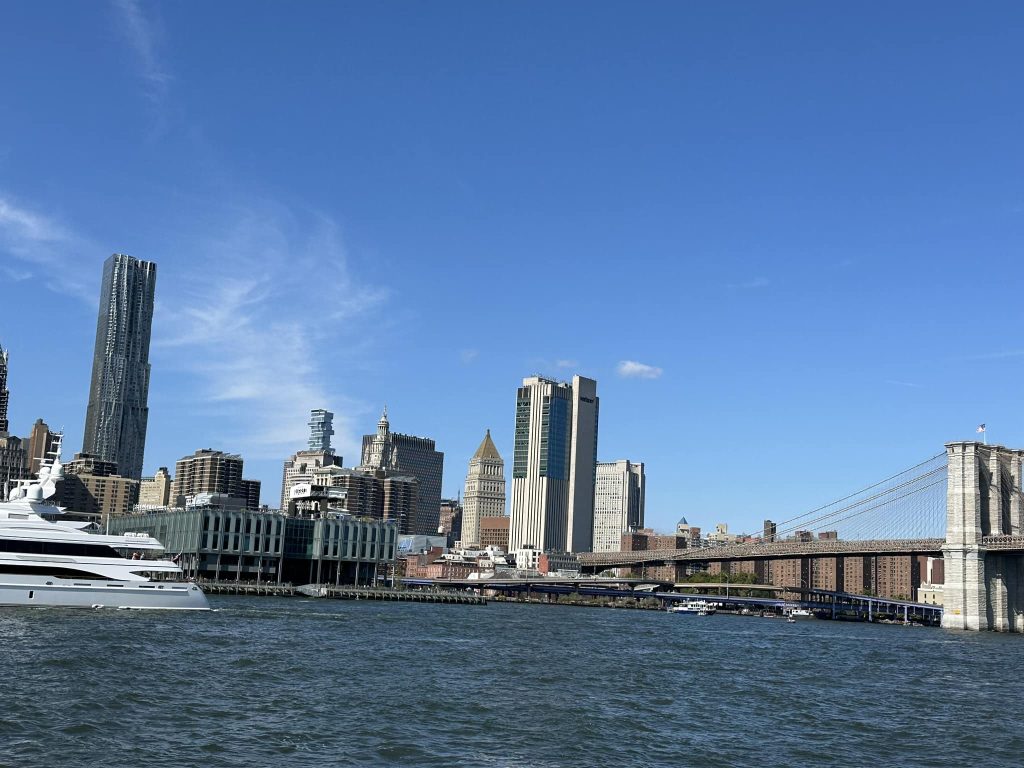
Brass Monkey
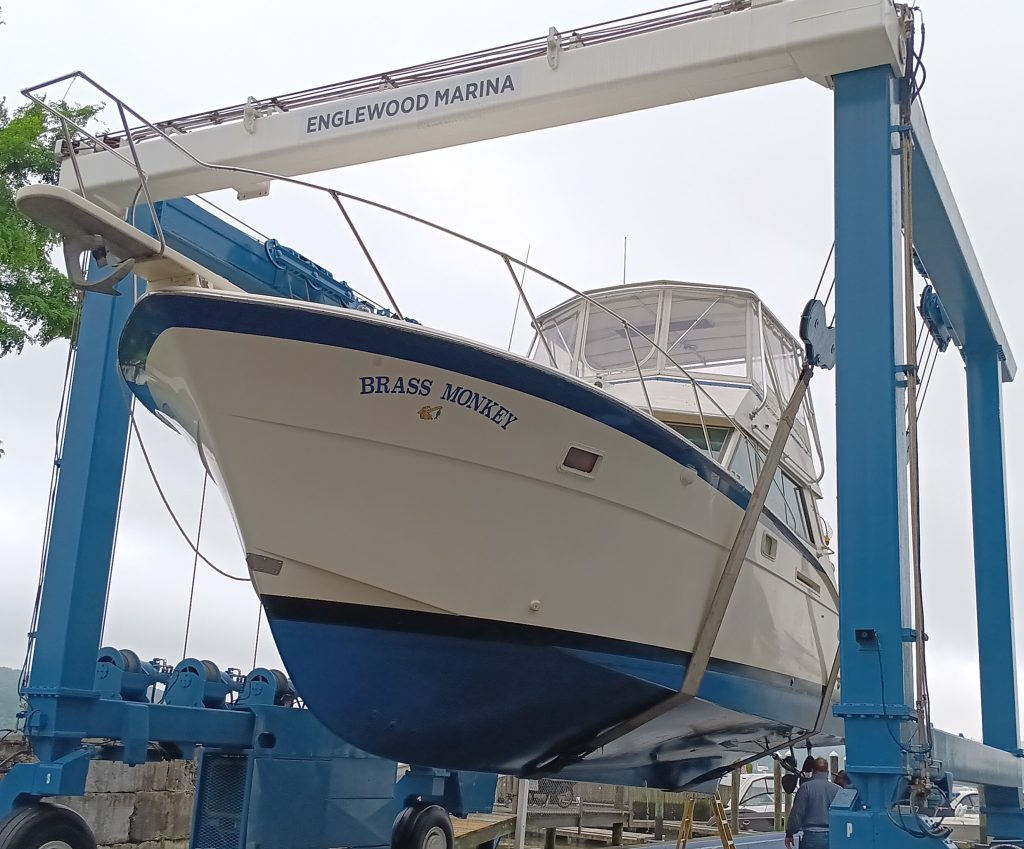
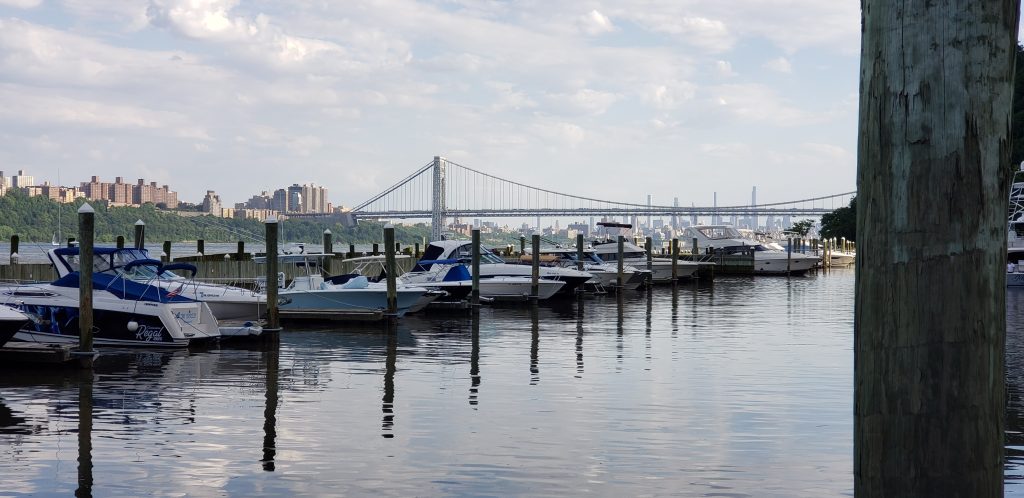
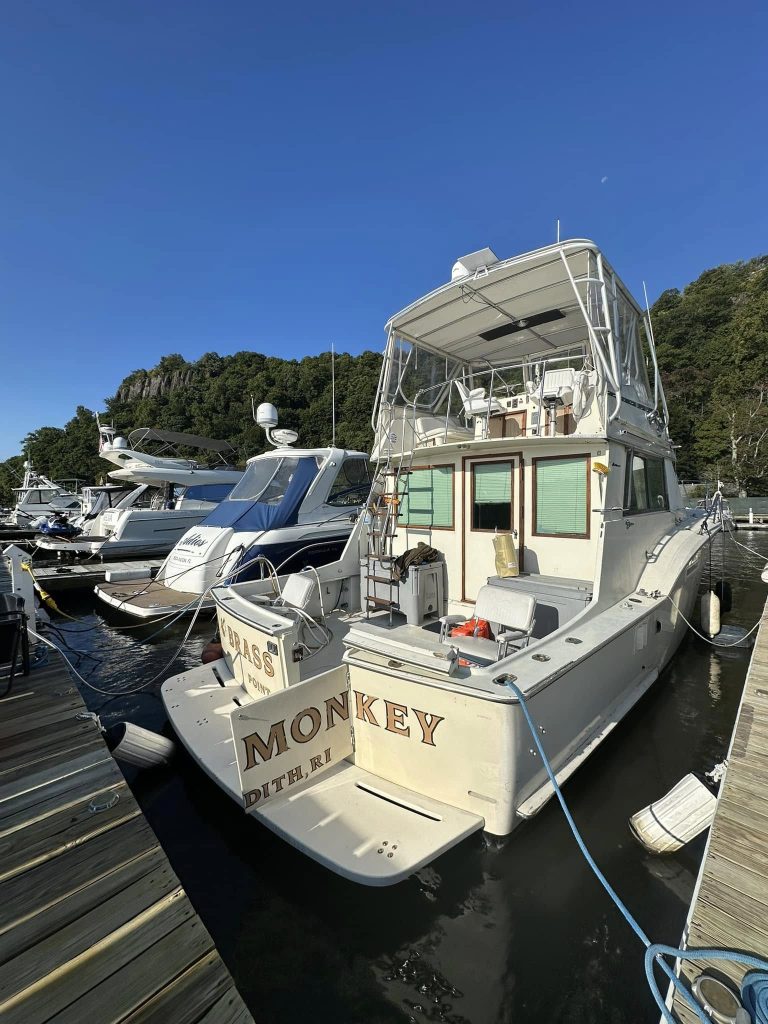
1976 Hatteras 42C, powered by a pair of Detroit Diesel 6-71TI two-strokes.
- BuilderHatteras 42C
- Year1976
- Power?Twin Detroit 6-71TITwo turbocharged, intercooled Detroit Diesel 6-71 two-strokes. Inline six, 71 cubic inches per cylinder, mechanical injection — nothing electronic to fail.
- Length?42.7′Registered length from her Coast Guard documentation — the measured hull only. Overall length with the pulpit and swim platform is longer.
- Beam?13′ 10″Her width at the widest point. It decides what slip she fits and how steady she rides.
- Draft?3′ 5″How deep she sits: waterline down to the lowest point of the hull and running gear — i.e. her 24-inch propellers. This is the number that matters over a shoal.
- Depth?7.0′Molded depth — the height of the hull itself amidships, from the top of the keel up to the main deck at the side. It is a tonnage measurement, not how deep she sits. That is draft.
- Displacement?31,000 lbWhat she actually weighs, measured as the weight of water she pushes aside while floating.
- Tonnage?27 GRT / 22 NRTNot weight — volume. A register ton is 100 cubic feet, figured from length × breadth × depth. Net tonnage subtracts the space given over to machinery and crew.
- Hull?FRP fiberglassFiber-Reinforced Plastic: hand-laid solid fiberglass, laid up heavy. The material Hatteras proved out at this size when nobody else trusted it.
- BuiltHigh Point, NC
- Hailing Port?Point Judith, RIThe port lettered on her transom and recorded on her documentation. It is a registration address, not necessarily where she is docked.
Under the hatches
The Detroit Diesel 6-71TI
General Motors put the 71 Series into production in April 1938, and it became one of the most respected diesels ever built. The name is plain arithmetic: each cylinder displaces a nominal 71 cubic inches, out of a 4.25-inch bore and a 5-inch stroke, which makes the inline six a stout 426 cubic inches.
It is a two-stroke, so every downstroke is a power stroke. A gear-driven Roots blower forces air through ports around the cylinder liner while exhaust valves sit overhead — uniflow scavenging, and the reason a 71 sounds the way it does. They have been called Screaming Jimmies for eighty years, and the sound is half the reason people love them. Fuelling is mechanical throughout: a unit injector per cylinder, cycled by the camshaft, held on speed by a mechanical governor. Nothing to scan, nothing electronic to fail.
On the TI the turbocharger feeds the blower inlet, unloading it at higher power and improving fuel burn, and an intercooler cools the charge air on its way in. Marinized 6-71TI ratings ran roughly 390 to 485 horsepower, against 238 to 310 for a natural — real power from a design that will rebuild in the hull and go right back to work.
Where she comes from
Hatteras origins
Hatteras began in 1959 with Willis Slane, a High Point, North Carolina textile man and a serious offshore angler who wanted a boat that could fish Diamond Shoals in weather that kept the wooden fleet at the dock. He backed a material nobody had trusted at that size — fiberglass — hired naval architect Jack Hargrave to draw a fast planing hull, and brought in Don Mucklow to build it.
On 22 March 1960 they launched Knit Wits, a 41-foot convertible with a 14-foot beam and twin 275-horsepower Lincolns: the first fiberglass boat ever built over forty feet. She was laid up heavy and dead solid, she was the hit of the 1962 New York boat show, and she changed the industry. She still exists, restored at the factory and running strong.
The yard opened at New Bern in 1967 and Hatteras yachts are built there to this day. The 42 Convertible comes from the strongest part of that run: by the mid-1970s the convertible line Slane started was a mature, proven product built by people who had been laying up glass for fifteen years. That is the boat on the lift at the top of this page.